
Gord WallaceFrom the video · watched 90,000+ times, from B.C. to Nova Scotiawatched 90,000+ times
Have you ever opened the grocery bill and felt your stomach drop?
Do you watch the pension deposit come in and wonder why it buys a little less every year?Do you watch the Social Security deposit come in and wonder why it buys a little less every year?
Do you lie awake some nights, doing the math on how long your savings will last?
You’re not alone. A lot of our generation is doing that same math at the kitchen table.
So let me tell you about a couple who found a way out. It might change the way you think about your own retirement money.
The evening that changed everything
Meet Doug and Carol.
“Grandpa, are you and Grandma coming out for my graduation?”
Doug held the phone a little tighter.
“We’ll see, sweetheart.”
Carol was standing in the kitchen doorway. She knew what “we’ll see” meant. Two flights to Calgary. A hotel. On a pension that hadn’t really moved in years.
He hung up, sat down at the kitchen table, and didn’t say a word for a long time.
Doug and Carol are the worked example in our Manual. But you probably know a couple just like them. Maybe you are one.
Both 68, in Oshawa. Doug put in 34 years at the plant. Carol raised three kids and kept the household books to the penny. They paid off the house. They paid every bill on time. They thought they’d done retirement right. Most of us did.
Then every year, something went up. The groceries. The insurance. The TV bill. And Doug’s plant pension barely moved.
So they did what our generation does. They tightened the belt. Carol circled the flyers. Doug turned the thermostat down and started putting things back at the till. He spent a whole evening on the CRA website and gave up. Every April their returns went in the way they always had: Doug’s pension on Doug’s return, Carol’s on hers.
Some nights he sat up at that kitchen table with a calculator and a pile of bills, doing the same math over and over.
Maybe this is just what retirement costs now, he told himself.
But deep down, he hated that thought. He hadn’t worked 34 years to tell his granddaughter “we’ll see.”
Then, at the Legion one Friday, an old friend from the plant said something that stuck with him.
“You and Carol ever split your pensions? We went back three years. Got a cheque from the CRA.”
Doug didn’t know what he meant. But for the first time in a long while, he wondered what else nobody had told them.
That evening, at that same kitchen table, they found out.
The rules had already set money aside for couples exactly like them. A form that lets a married couple split a pension, and go back three years to fix the years they missed. A savings rate their own bank posts right at the counter, and never mentions. A C$25 TV package the rules make their provider offer.
Not the bank. Not the tax people. Not one person ever told them to ask.
What happened next
- Week oneCarol asked one question at the bank counter. Their savings stopped earning 0.01%. C$27 a month.
- Week twoTwo phone calls. Same network, cheaper brand. The C$25 TV package. C$36 a month.
- End of the first monthC$101 a month back in the budget, from the five quickest moves.
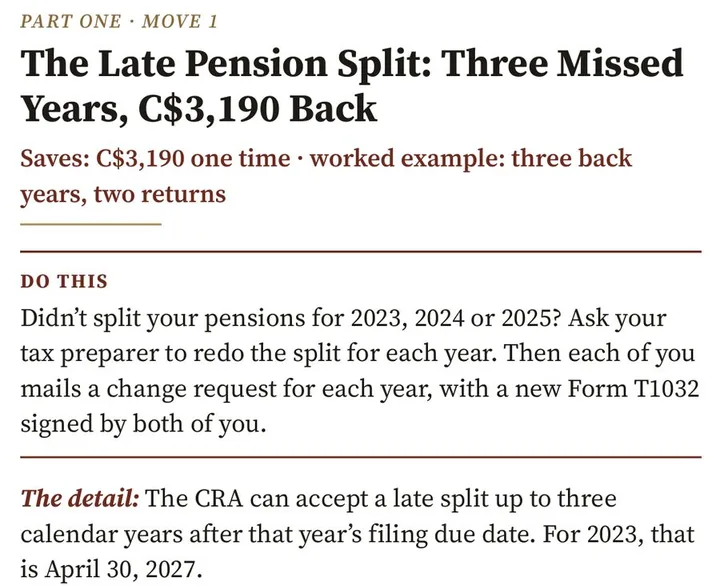
- Before November 30Three years of pension-split forms in the mail. Both signed.
- Next summerThe CRA’s answer: C$3,190 back from three missed years. The CRA decides
C$7,043.
Same doctor. Same bank. Same channels. They didn’t give up a thing.

Last week, Doug called his granddaughter back.
“Grandpa, you’re really coming?”
“Wouldn’t miss it, sweetheart.”
Carol says it’s the first night in years she’s seen him sleep straight through.
One more thing Carol didn’t expect
Everything is written down now. Part Two of the Manual is eleven moves that guard what you keep, and they filled in the Family Workbook together, side by side: every account, every pension office, who to call and what to say.
It’s on the fridge.
“If anything ever happens to me,” Doug told her, “it’s all there. You won’t be sitting at this table alone with the envelopes.”
If your house looks anything like theirs, keep reading.
The evening that changed everything
Meet Bill and Karen.
“Grandpa, did you hear me?”
He hadn’t. Third time that dinner.
Bill smiled and nodded, the way he’d learned to. Across the table, Karen watched their granddaughter’s face fall.
After everyone went home, he sat at the kitchen table and didn’t say a word for a long time.
Bill and Karen are the worked example in our Manual. But you probably know a couple just like them. Maybe you are one.
Both 68, in Dundalk, Maryland. Bill drove a delivery route out of Baltimore for 33 years. Karen kept the house running and the checkbook balanced to the penny. They paid off the house. They paid every bill on time. They thought they’d done retirement right. Most of us did.
Then every year, something went up. The groceries. The insurance. The cable bill. And Social Security never seemed to keep up.
So they did what our generation does. They tightened the belt. Karen clipped coupons again. Bill put off the hearing aids, because the clinic quoted thousands. Karen read the plan booklet twice and still couldn’t tell what would change in January. Bill sat on hold for an hour and hung up with nothing.
Some nights he sat up at that kitchen table with a calculator and a pile of bills, doing the same math over and over.
Maybe this is just what getting old costs, he told himself.
But deep down, he hated that thought. He hadn’t driven that route for 33 years to miss what his granddaughter was telling him.
Then, after church one Sunday, an old friend said something that stuck with him.
“You know you don’t need the clinic for hearing aids anymore? There’s been a federal rule since 2022.”
Bill hadn’t known. And for the first time in a long while, he wondered what else nobody had told them.
That evening, at that same kitchen table, they found out.
The rules had already set money aside for people exactly like them. A letter that shows whether your drug plan costs more next year. A 30-day window every birthday for the same Medigap coverage, for less. A 2022 federal rule that lets you buy hearing aids without the clinic price. Fees on the cable bill that aren’t taxes at all.
Not the insurance company. Not the cable company. Not one person ever told them to ask.
What happened next
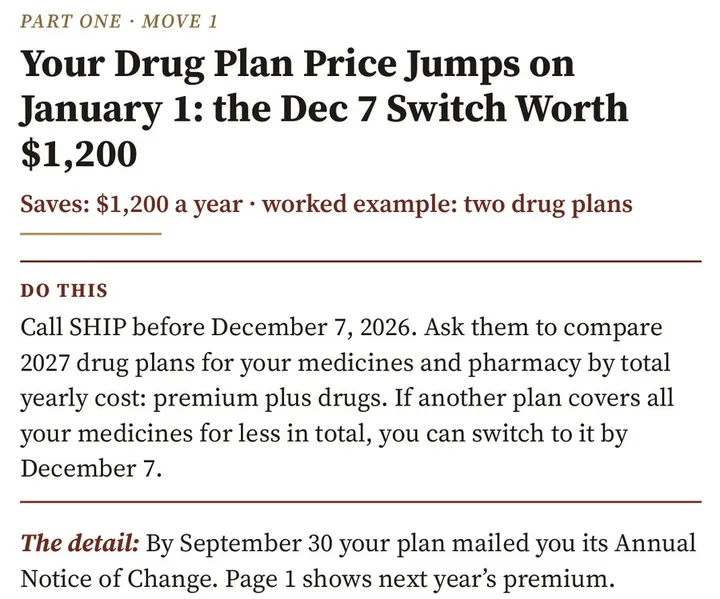
- Week oneThe drug-plan letter came out of the drawer. One switch before December 7. $1,200 a year.
- Week twoFour quick bills. Same phones, same towers, lower plan. Cable fees that aren’t taxes. $99 a month.
- Month twoHearing aids off the shelf, under the 2022 rule. $2,820 less than the clinic. One pair
- Karen’s birthdayThe 30-day window. The same Medigap coverage, for less. $353 a year.
$6,942.$5,742.
Same doctors. Same coverage. Same channels. They didn’t give up a thing.
Sunday dinner, a month later.
“Grandpa, did you hear me?”
“Every word, sweetheart.”
Karen says she had to leave the table for a minute.
One more thing Karen didn’t expect
Everything is written down now. Part Two of the Manual is eleven moves that guard what you keep, and they filled in the Family Workbook together, side by side: every account, every pension office, who to call and what to say.
It’s on the fridge.
“If anything ever happens to me,” Bill told her, “it’s all there. You won’t be sitting at this table alone with the envelopes.”
If your house looks anything like theirs, keep reading.